Seasonal Discount Cycles Steering Indie Creators Toward Algorithm-Friendly Puzzle-Action Hybrids
Written by Olivia Griffin · Jun 12, 2026
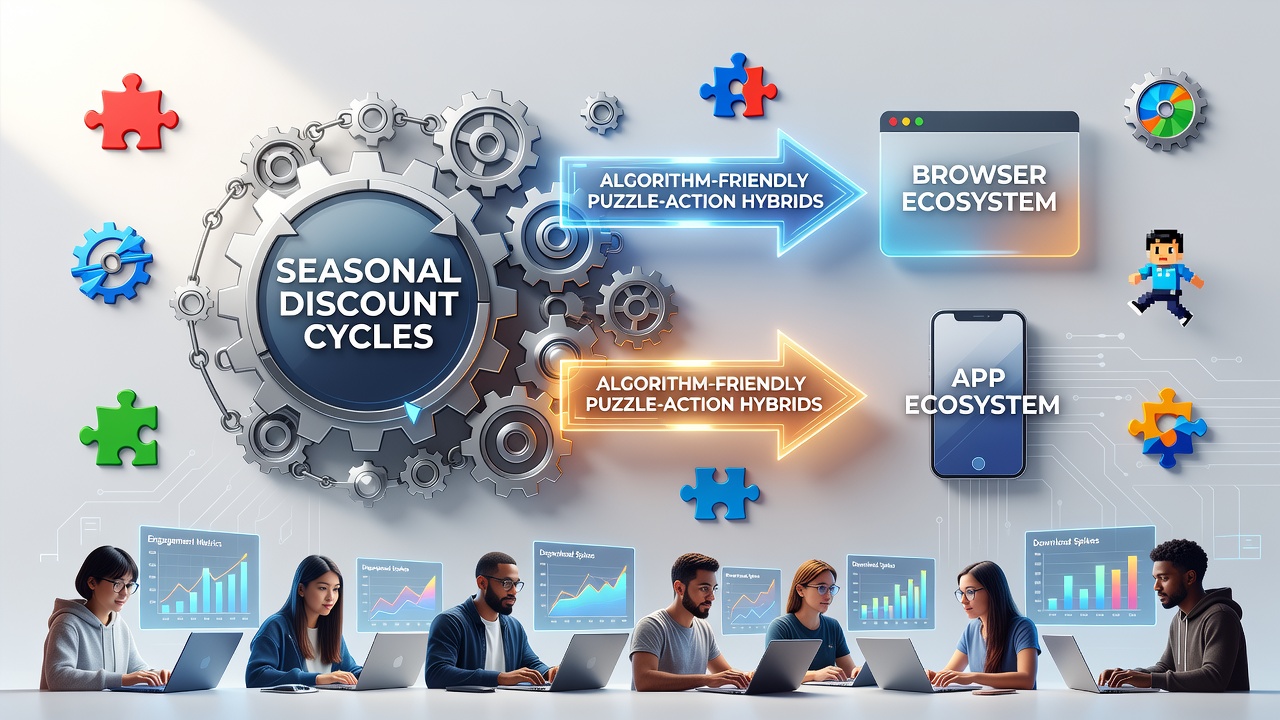
Seasonal Discount Cycles Steering Indie Creators Toward Algorithm-Friendly Puzzle-Action Hybrids
Seasonal discount cycles create predictable windows where platform algorithms elevate certain game formats, and indie creators respond by prioritizing puzzle-action hybrids that match recommendation patterns in browser and app ecosystems. These cycles include summer promotions, holiday events, and mid-year flash sales that run through June 2026, when multiple storefronts adjust visibility rules to highlight free-to-play and discounted titles.
Platform Algorithms and Visibility Patterns
Store algorithms reward games that sustain engagement metrics such as session length, completion rates, and share frequency, which explains why puzzle-action hybrids appear more often during discount windows. Developers track these signals because higher placement in recommended lists translates directly into download volume during limited-time promotions. Data from the International Game Developers Association shows that titles combining quick logic sequences with movement-based challenges maintain user retention across both desktop browsers and mobile apps.
Developer Adaptation During Mid-Year Sales
In June 2026 several indie teams released browser-compatible puzzle-action hybrids timed to coincide with platform summer deals, and the pattern reflects earlier cycles where similar releases gained algorithmic traction. Creators adjust core loops so that puzzle segments feed into short action bursts, producing the repeat-play statistics platforms favor when ranking discounted content. This approach allows small studios to compete for featured slots without relying on large marketing budgets, since the format itself aligns with automated discovery tools.
Browser ecosystems reward lightweight builds that load quickly and maintain frame consistency, while app stores prioritize titles that integrate seamlessly with touch and controller inputs. Hybrid designs satisfy both environments because puzzle elements scale across input methods and action segments deliver immediate feedback that algorithms register as positive interaction. Teams therefore prototype mechanics that function in HTML5 environments first, then port optimized versions to native app frameworks.
Cross-Platform Distribution and Revenue Timing
Distribution networks amplify reach when seasonal pricing aligns with algorithmic boosts, allowing one codebase to serve multiple storefronts simultaneously. Indie groups coordinate release schedules around known discount calendars so that initial visibility spikes occur when user traffic peaks. Research from the Australian Digital Games Research Centre indicates that hybrids released in these windows record elevated cross-device play sessions compared with pure puzzle or pure action releases issued outside promotion periods.
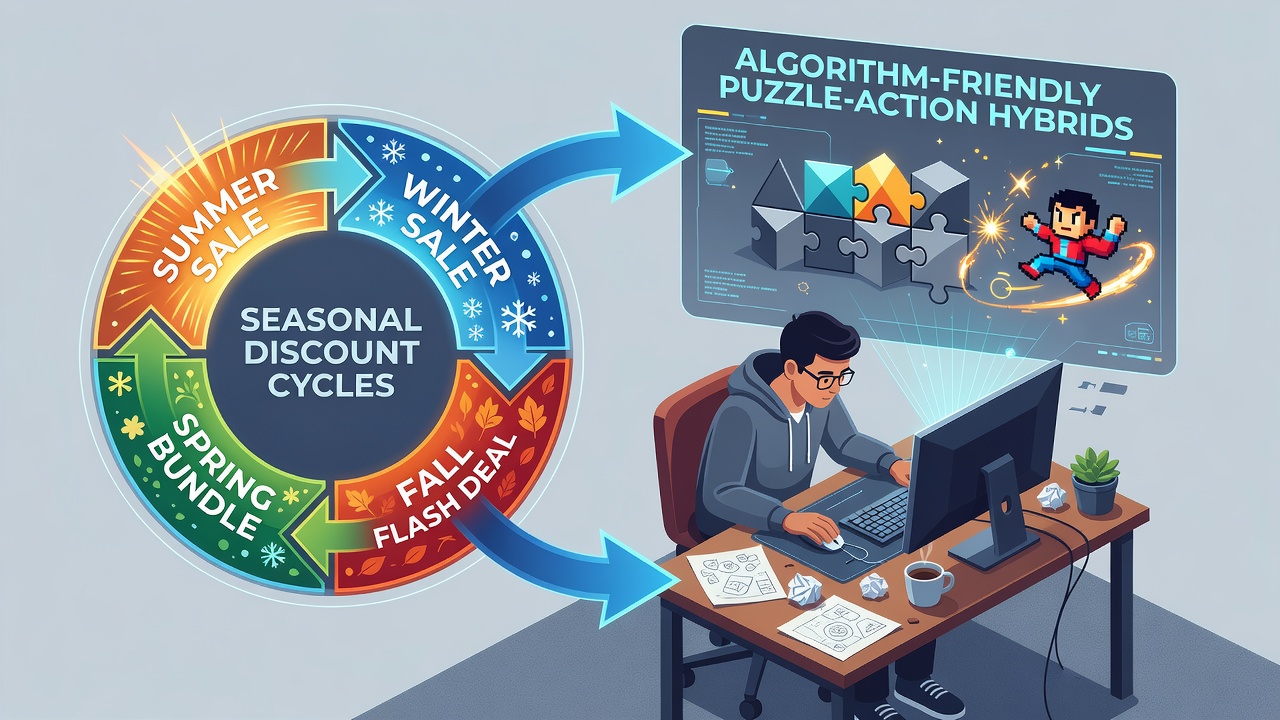
Mechanics That Align With Recommendation Systems
Successful hybrids feature modular level structures where puzzle solutions unlock brief action sequences, creating natural progression loops that algorithms interpret as sustained interest. These loops generate the telemetry data platforms use to predict long-term retention, which in turn influences placement in personalized feeds during discount events. Creators document that incremental difficulty curves combined with optional cooperative elements further improve share rates across social integrations built into browser and app environments.
Platform partnerships sometimes supply additional promotion slots for titles that demonstrate strong performance in early discount windows, reinforcing the incentive to refine hybrid formats. Smaller studios therefore allocate resources toward mechanics that deliver measurable engagement signals rather than expansive narrative systems that may not register as quickly with automated ranking tools.
Observed Shifts in Content Production
Production pipelines have shortened for hybrid projects because puzzle and action modules can be developed in parallel and tested independently before integration. This modularity suits teams operating with limited staff, since individual contributors can focus on discrete systems while maintaining compatibility across browser and mobile builds. Figures from the European Games Developer Federation reveal increased hybrid submissions in the first half of 2026, coinciding with multiple overlapping seasonal campaigns on major digital storefronts.
Analytics dashboards available to registered developers display comparative performance of different genres during past discount cycles, guiding resource allocation toward formats that historically convert views into sustained play. The resulting output concentrates on puzzle-action hybrids because they consistently outperform other combinations in retention metrics tracked by both browser portals and app distribution services.
Conclusion
Seasonal discount cycles continue to shape indie development priorities by rewarding puzzle-action hybrids that match algorithmic preferences in browser and app ecosystems. Creators time releases and refine mechanics to capitalize on visibility windows that peak in June and other promotion periods, producing content that performs reliably across cross-platform distribution networks. The pattern sustains itself as platforms record stronger engagement data from these titles, which in turn influences future recommendation parameters during subsequent discount events.